
Our Building
Church of the Earth
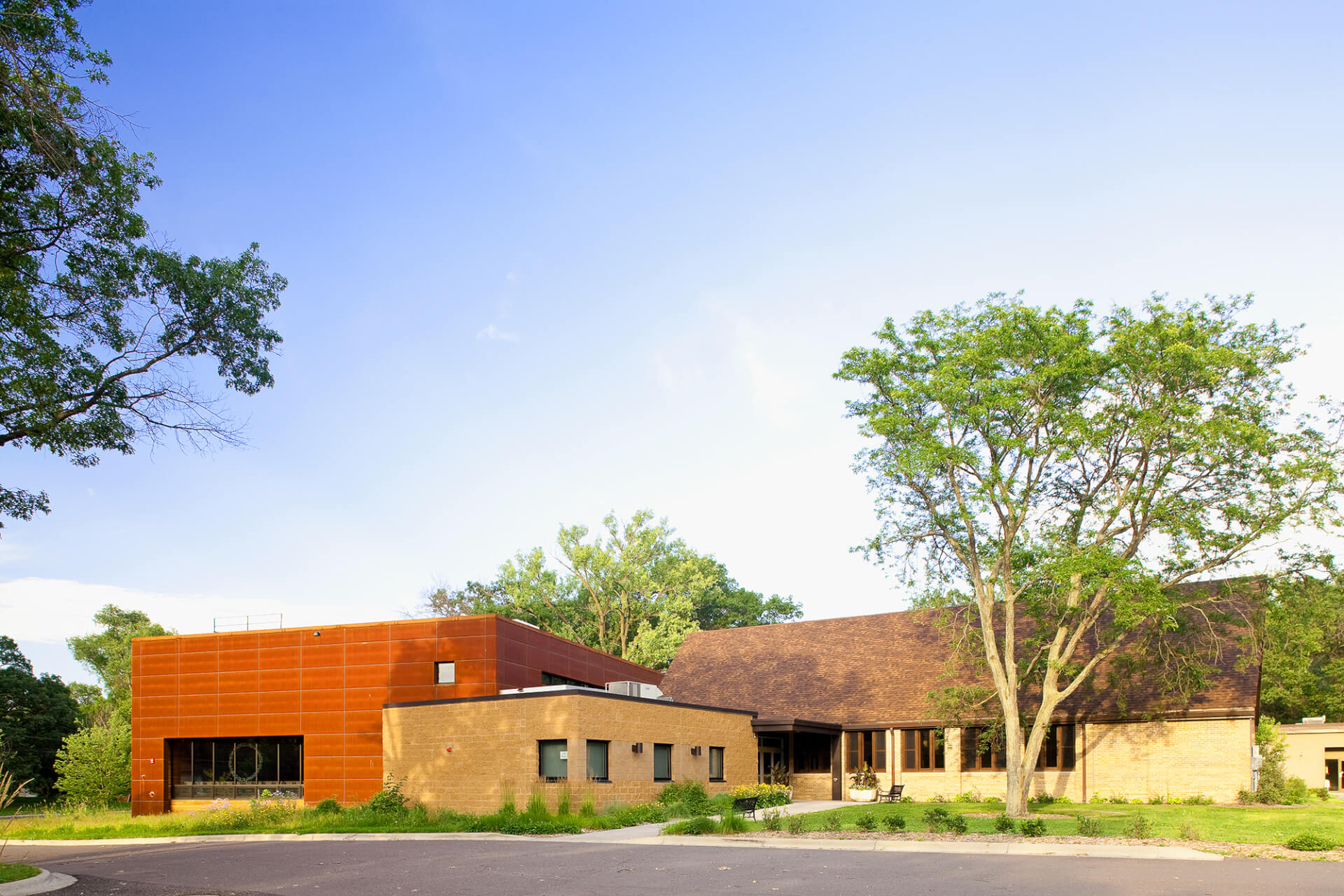
Green Design
White Bear Unitarian Universalist Church purchased its current building in 1990, and within a year or two expanded the space by adding a large wing of 8 Religious Education classrooms, a renovated kitchen and new Social Hall. The congregation continued to grow and plans were already underway to study the possibilities for new expansion.
After many months of careful reflection, passionate discussion and serious research, we contracted with Locus Architecture in 2006 to design new space on the site, and to do so in ways that would honor, protect and preserve our beautiful 4.5 acre property, integrating several deliberate choices:
Re-purposing our existing structure
Rather than razing the original 1959 building, we re-imagined new purposes for old spaces. Our Meeting Room became our Social Hall; the cramped church offices became a spacious Program Suite; the original chancel (stage) was divided, and part of it is now a pantry.
Natural lighting
We added skylights in the new Social Hall, flooding it with natural light, and installed “solar tubes” in the Program offices, significantly reducing the need for artificial light and further lowering the church’s CO2 emissions.
A new solar system
In collaboration with a local (member-owned) company, we installed 54 photovoltaic panels on the new roof, capable of generating 35 kilowatt-hours of power daily (the annual equivalent of burning 10,000 pounds of coal), reducing CO2 emissions by approximately one ton per month. In 2024, the church added 52 new panels to the existing 54, trippling the annual production of electricity.
Preservation of habitat
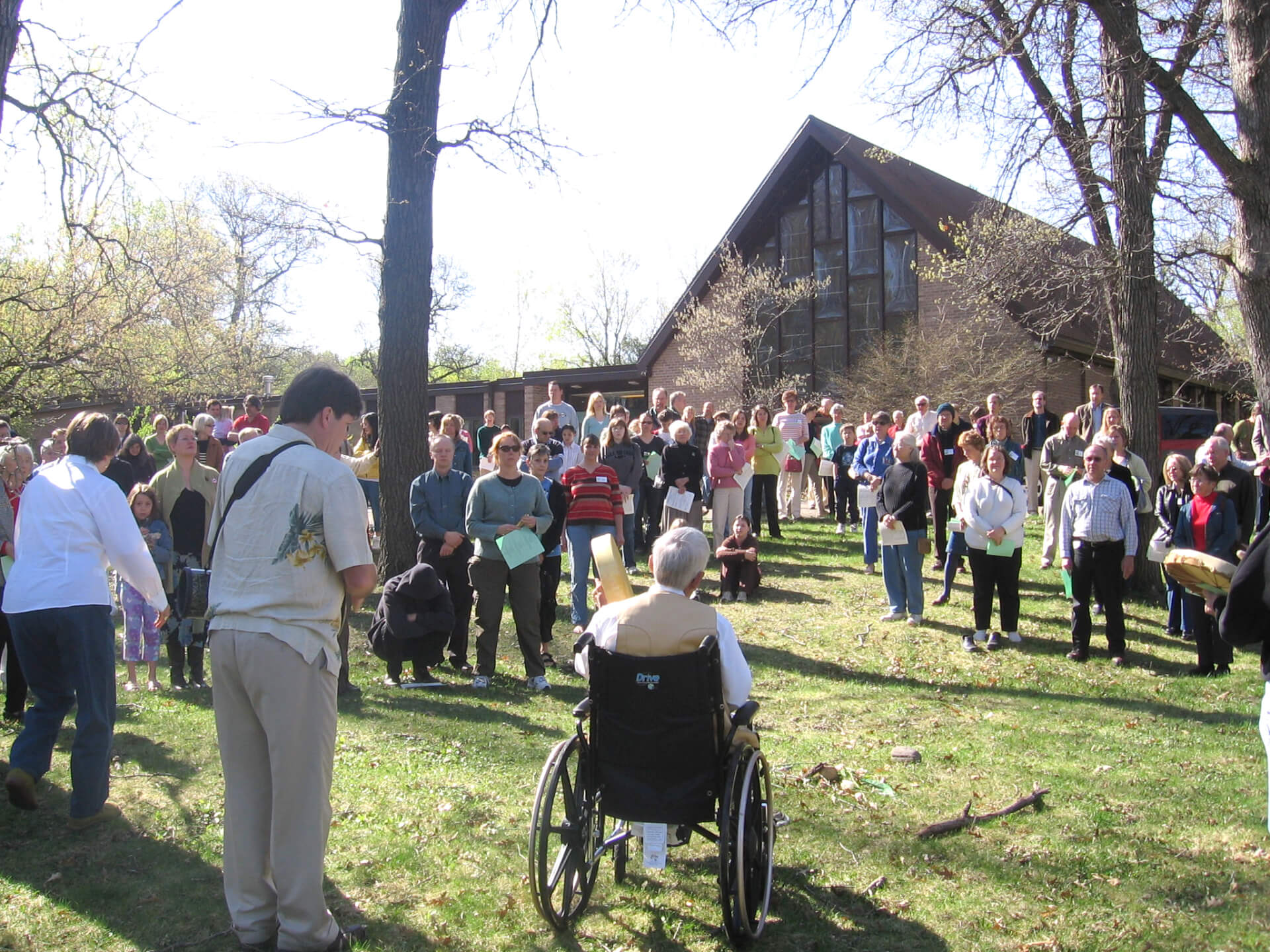
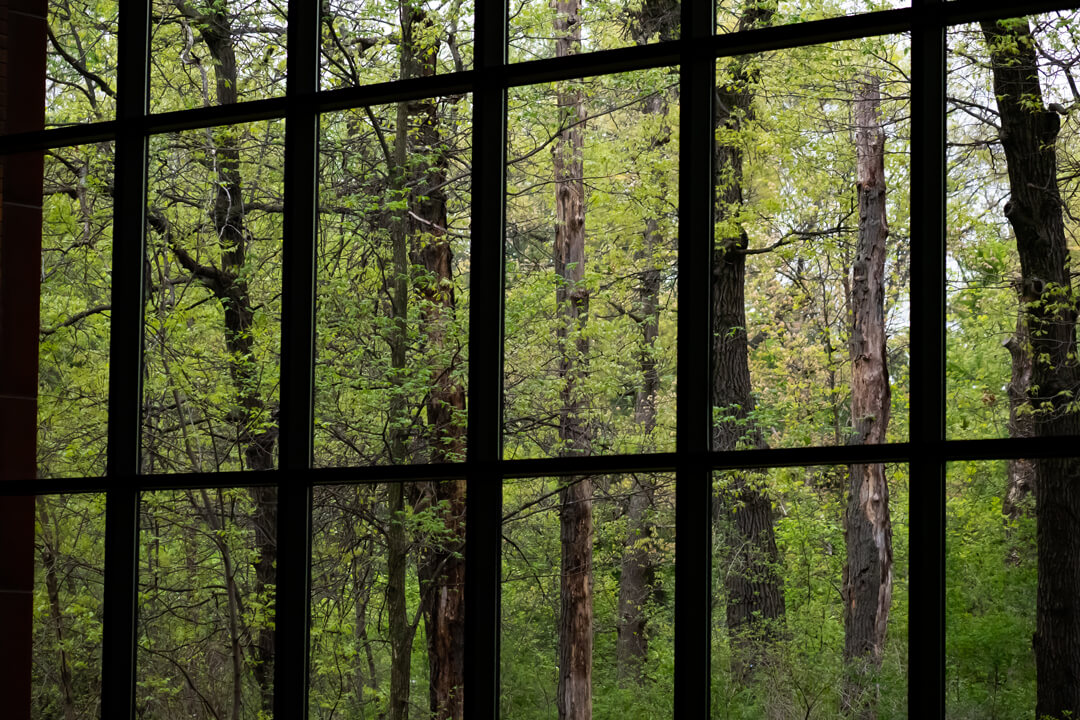
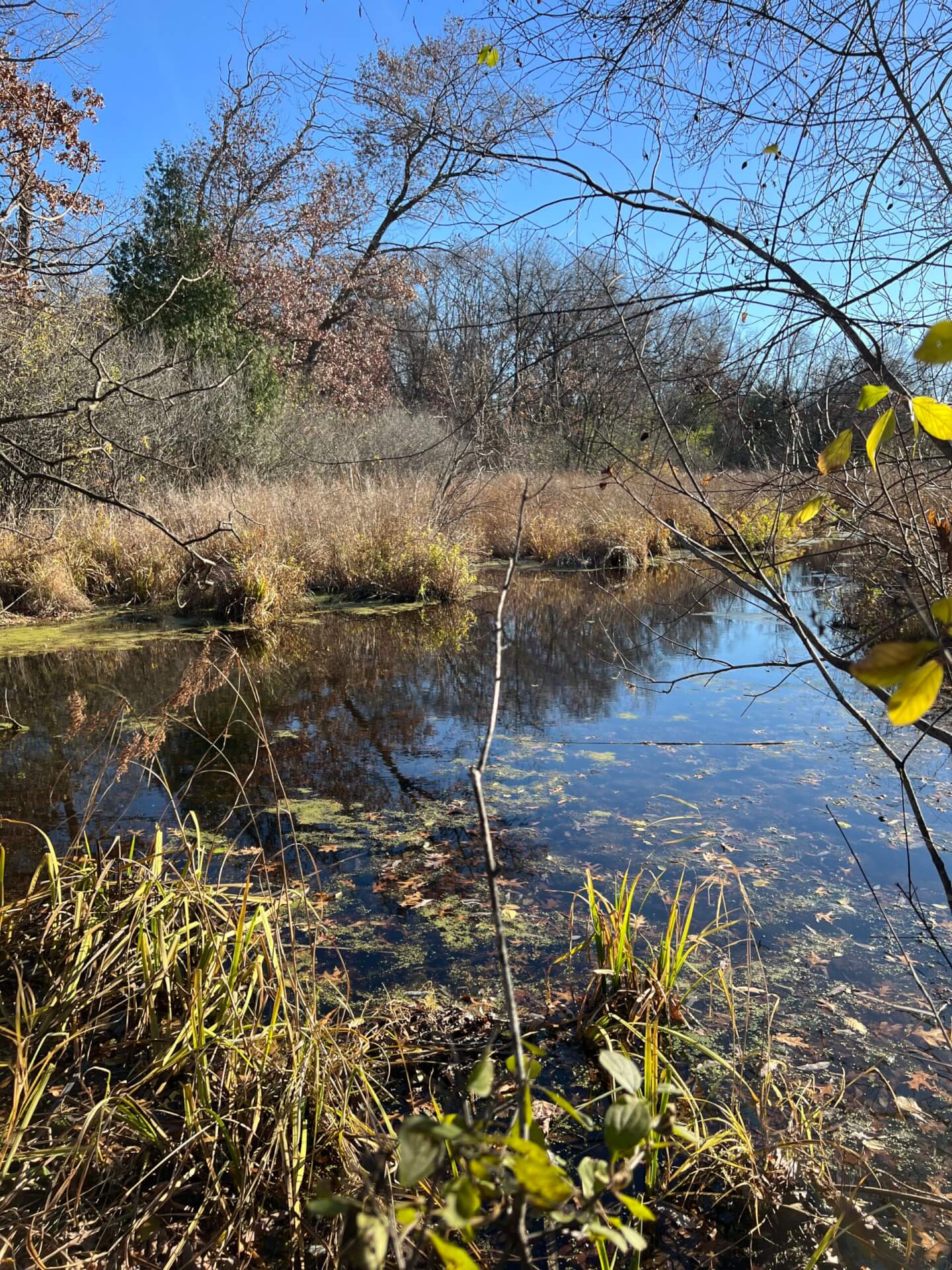
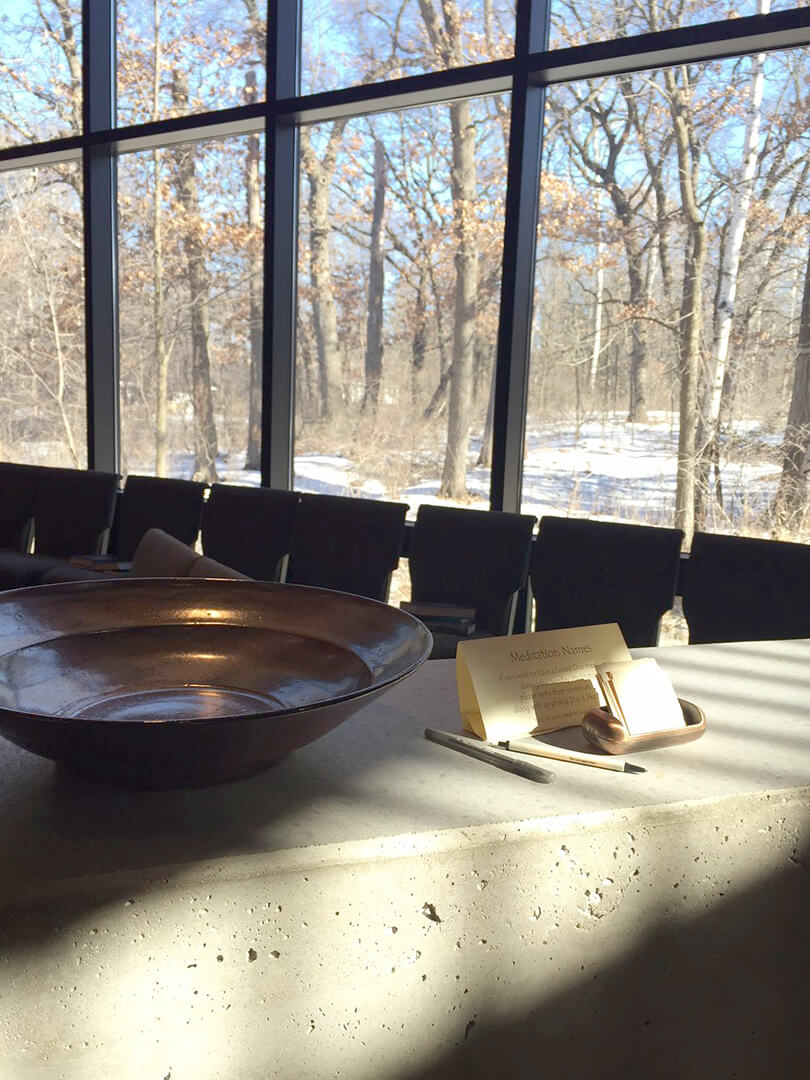
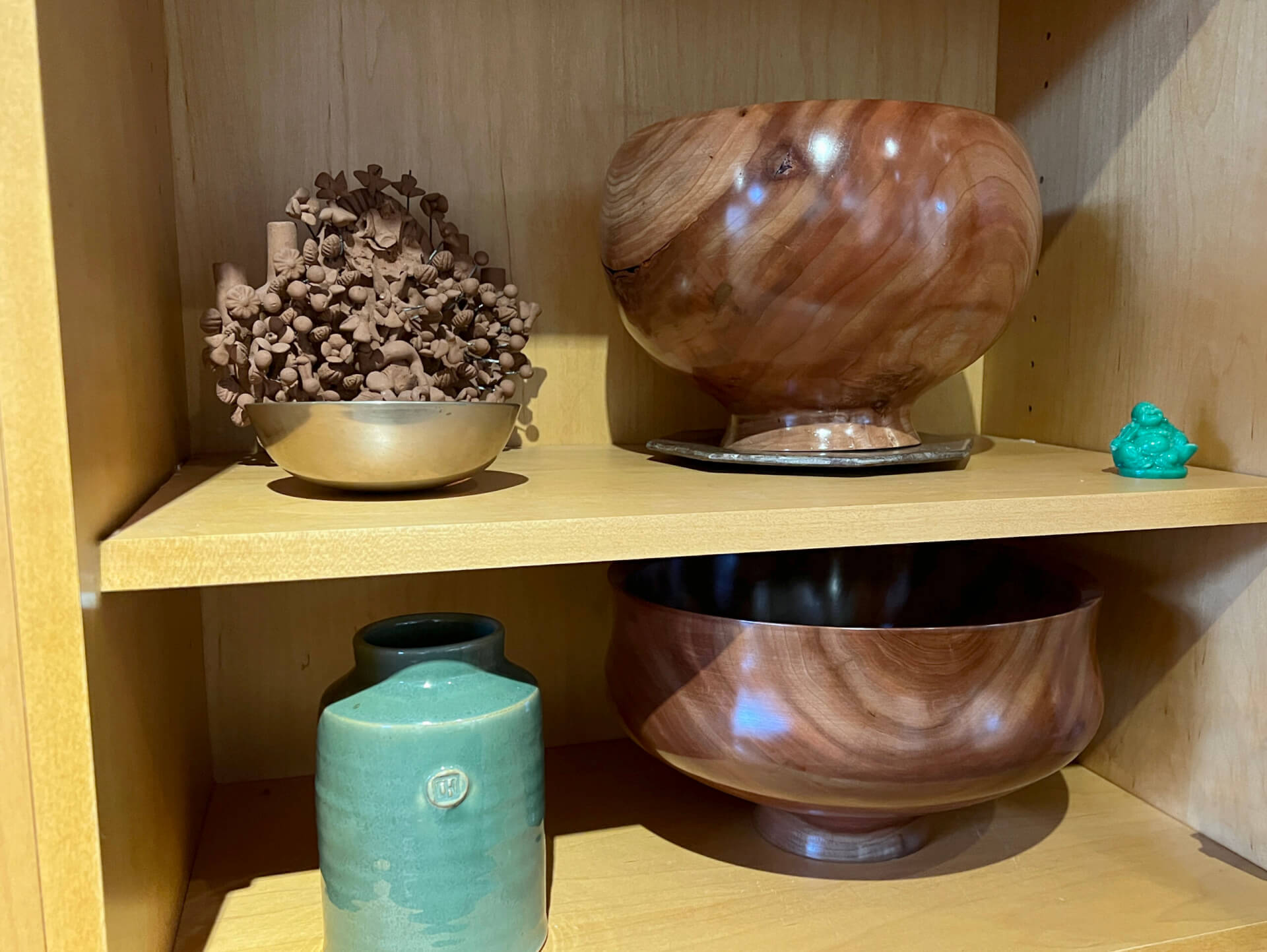
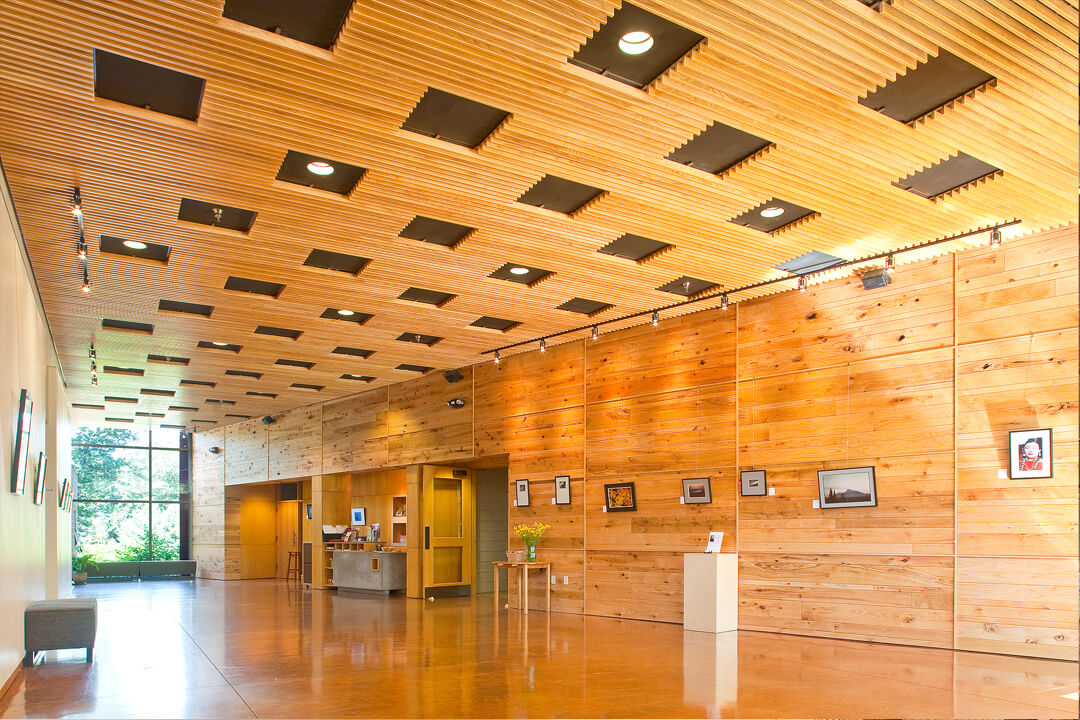
Three-quarters of our site is protected wetland which we may not develop; the remainder is a cherished woodland, home to a variety of deciduous and coniferous trees, native plants, many birds (including raptors and waterfowl), small mammals, deer, and (rarely) visiting coyotes. Early in our planning we chose deliberately to limit the size of new parking lots to preserve wild space. We were mindful that this decision could cause challenges in time (and it has – parking may already be limiting our growth), but reverence for the land is a core value here. We invited an arborist from the University of Minnesota to prepare a diagnostic inventory of our entire forest (every tree!), helping us preserve 95% of our trees, even as we doubled the size of our building. The loss of even a small number of living trees proved to be the most painful aspect of our project. We worked with an indigenous shaman to understand the spiritual consequences of our choices. We invited children and adults to bless the trees that would be sacrificed, and we resolved to mitigate the damage by incorporating lumber from felled oaks (red and white) into the building and its furnishings. The oak panels on the dramatic north wall of the Atrium were hewn from trees which once stood exactly on that ground; the pulpit desk, too, is made of oak from a tree which once stood in that place. A small table, an elegant hand-crafted cabinet and several beautiful turned bowls on display in our Welcome Center, were all fashioned from wood harvested on site. From the breathtaking east window of our sanctuary, we see the living forest in every season.
Groundwater
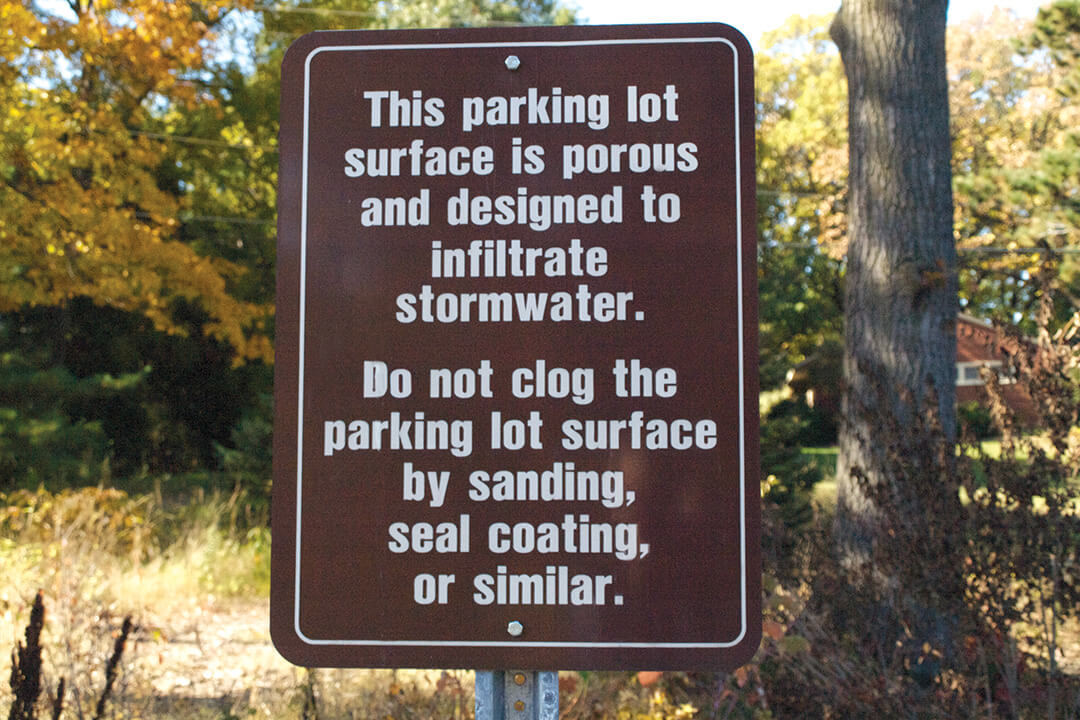
At the time of its construction, our parking lot was the largest permeable paving project in Minnesota. We received a $50,000 grant from the Rice Creek Watershed District to construct a porous surface allowing rainwater to drain through natural filters into an underground reservoir before it flows into groundwater. The reduction in pollutants is significant.
Sustainable landscaping
Landscaped spaces on our grounds feature native plants and grasses that thrive without the use of fertilizers and attract a variety of birds and insects. Only a small amount of lawn requires mowing.
Low maintenance materials inside and out
Beautiful concrete floors in the Atrium and hallways are finished with long-lasting penetrating stains requiring minimum maintenance and avoiding the use of carpeting.
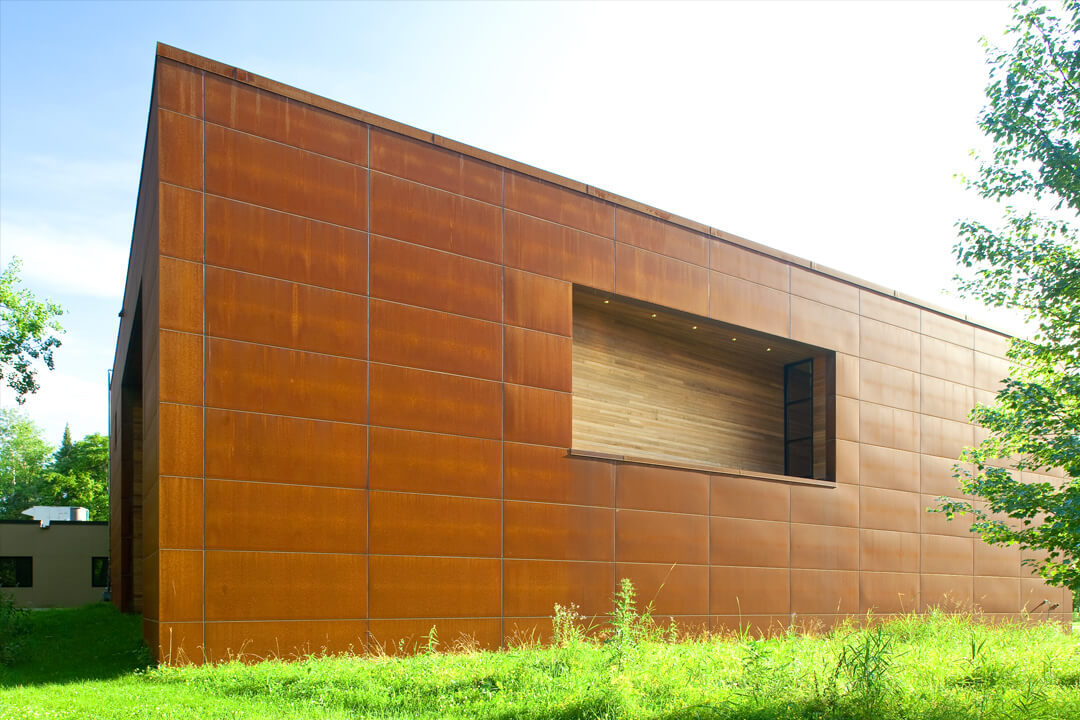
The exterior of our sanctuary is cast in Cor-Ten steel, which cannot decay or rot, and will never require painting or treatment. Naturally oxidized to a warm auburn-rust, it blends in fall with vibrant red maples and gleams brightly against snowy skies in winter.
Church of the Earth
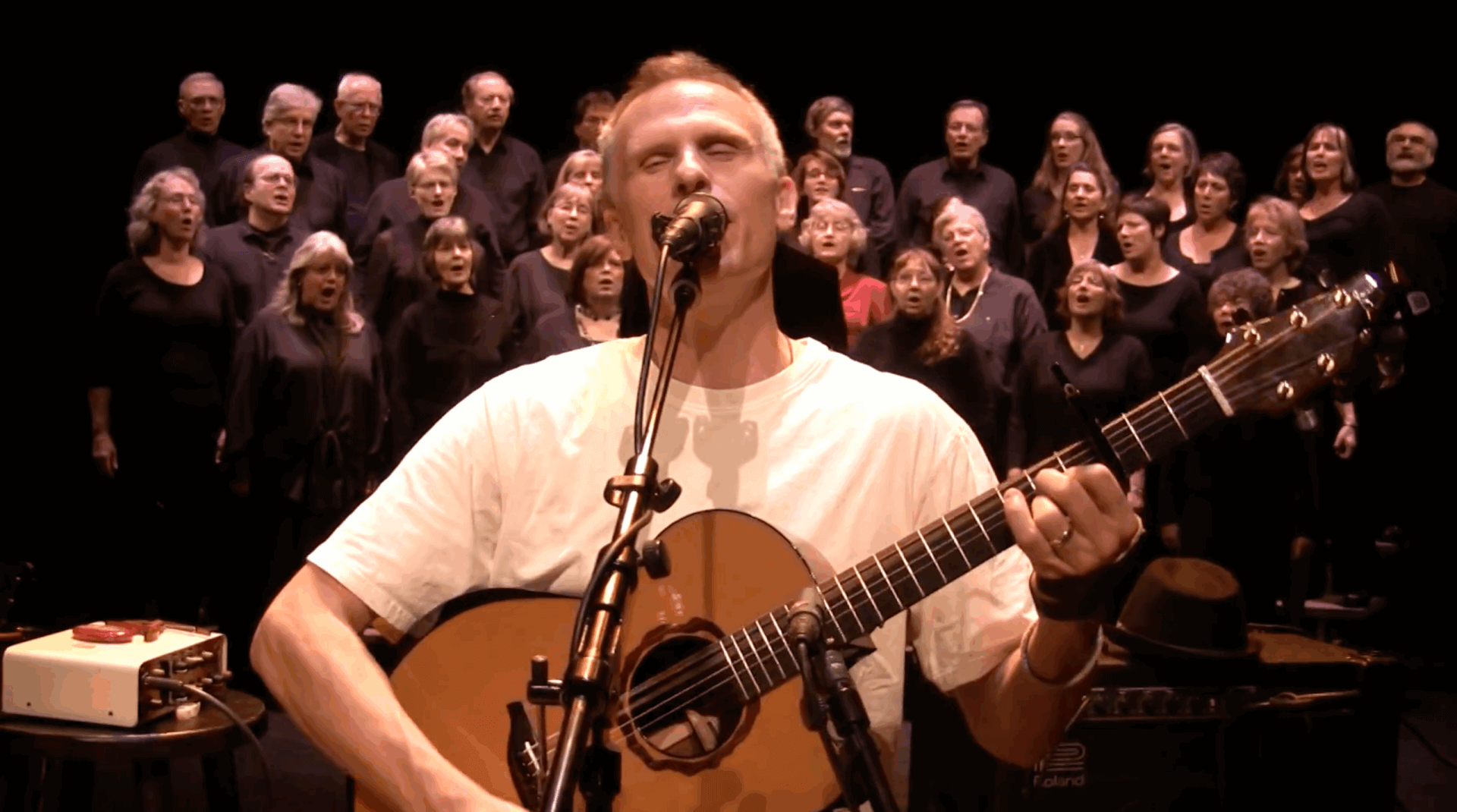
In October 2007, we gathered at last to dedicate our new sanctuary, and we commissioned member Peter Mayer to compose an anthem for the day, acknowledging the care and reverence with which our project was designed. We have been singing “Church of the Earth” ever since. In 2010, Peter recorded this song with the WBUUC choir.
Our Labyrinths
The labyrinth is an ancient tool for walking meditation and contemplation. It is a good metaphor for the complexity of being alive on earth. Unpredictable turns on the path lead us in directions we can’t anticipate. Our emotions take us to places we don’t expect. Yet, labyrinths hold us safely as we walk, leading us to the center and out again. We can’t get lost, as in a maze. Simply step onto the path and follow; feel the earth come up into your feet as you move deeper and deeper into the circle. At a pace that is just right for you, you’re free to hold an intention or hold no intention or focus your breath.
Our congregation is blessed with two beautiful labyrinths: a large canvas circuit for indoor use, and an outdoor labyrinth on the eastern edge of WBUUC property, along East Ave. You are welcome to walk these at any time. To use the canvas labyrinth, contact the WBUUC office.
Our Portable Canvas Labyrinth
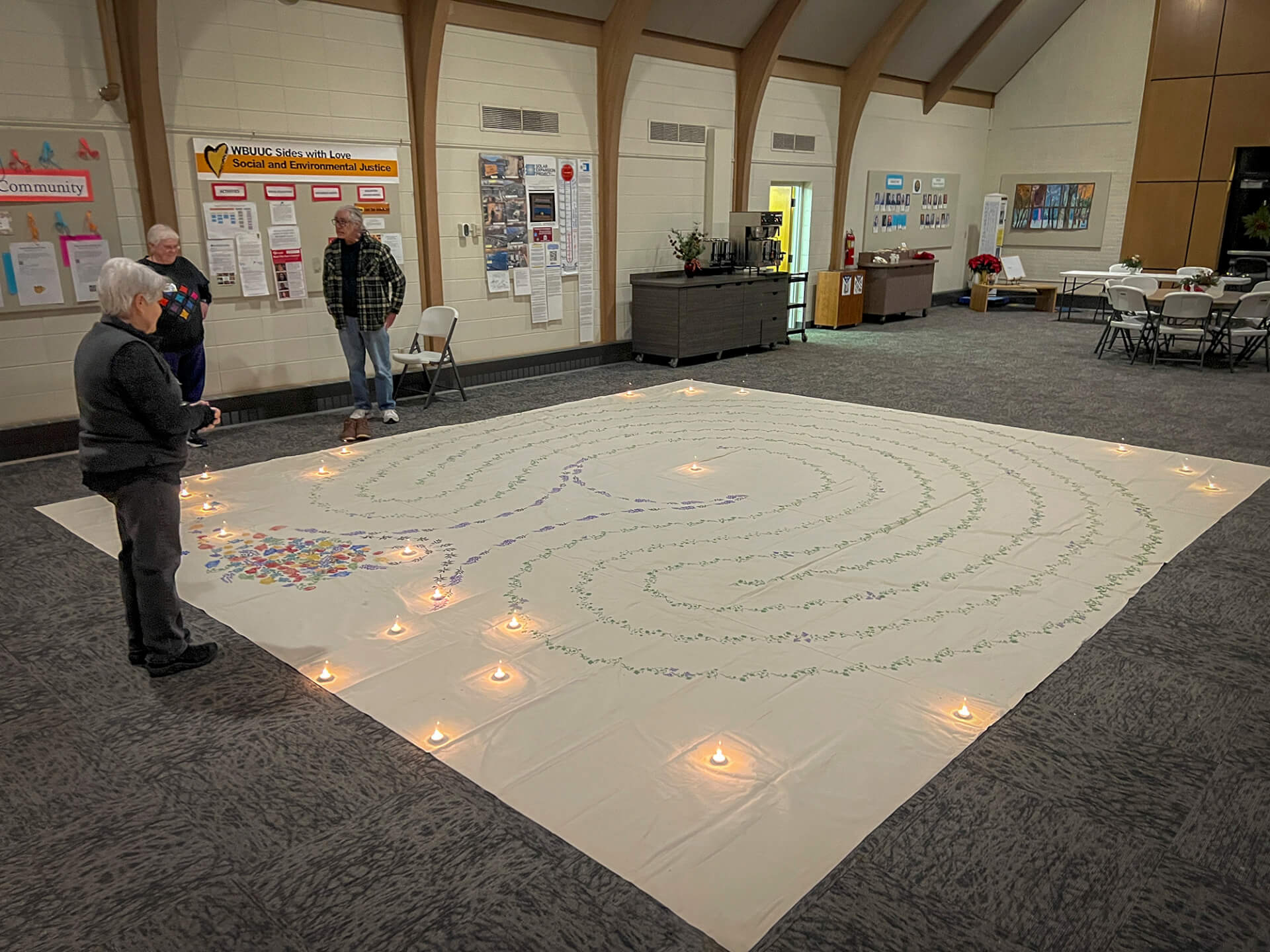
The Dancing Woman labyrinth can be laid out in the sanctuary, the atrium, or the social hall.
The Dancing Woman is an original created by labyrinth designer and historian, Lisa Gidlow Moriarty, who also helped us create our outdoor labyrinth. The canvas labyrinth was hand-painted by many women of WBUUC years ago.
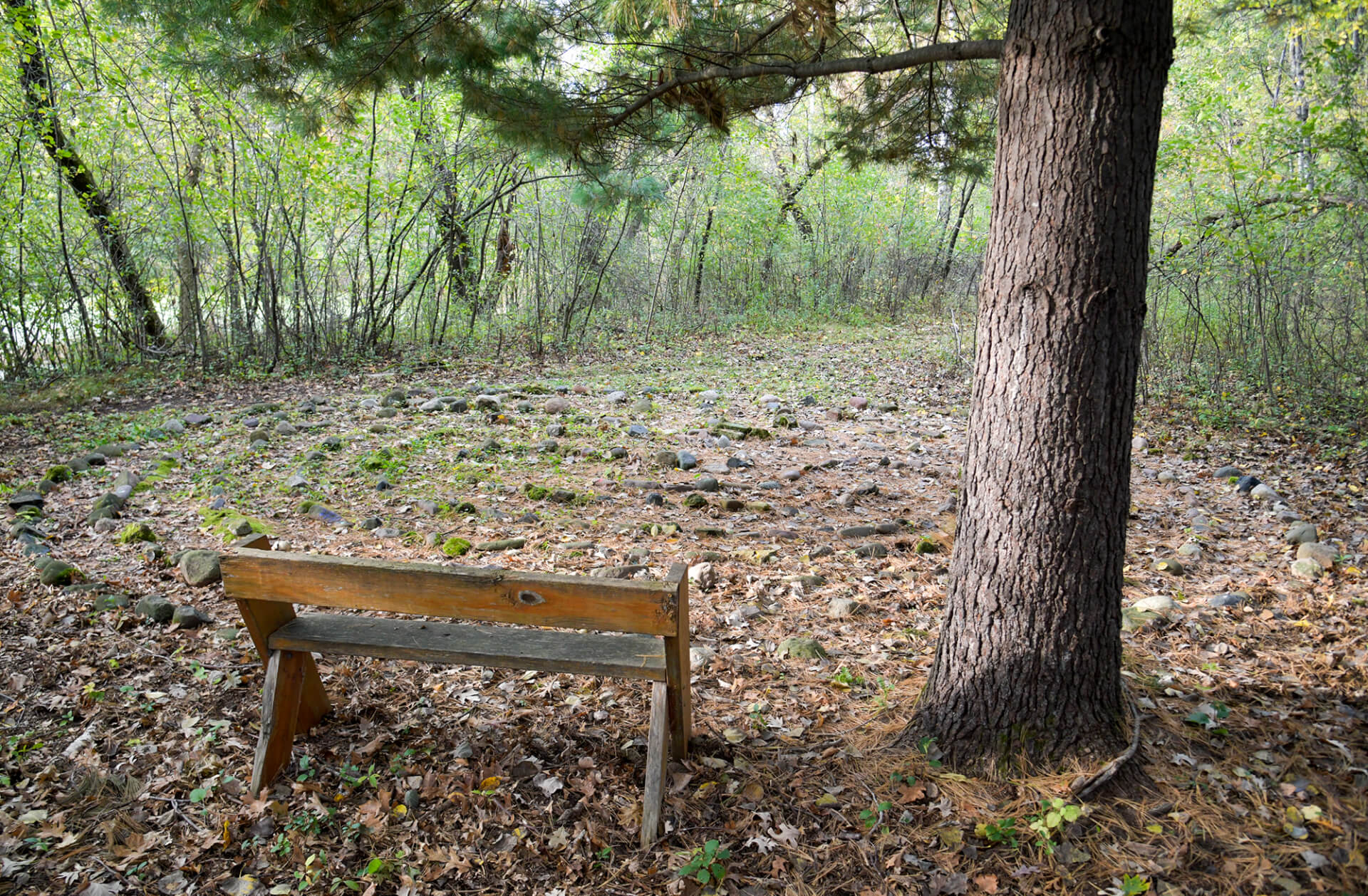
Our Outdoor Labyrinth
Our outdoor labyrinth is located on the east side of our building, on the eastern edge of the woods in the corner defined by Maple Street and East Avenue. Walk from the Social Hall courtyard around the back of the building (the back of the RE classrooms) on the short path near a large fire ring. The path continues along the edge of the marsh, curving gently to the right.